World of Animals
Cute, furry animals make us want to pick them up, cuddle them, and play with them. But do they want the same thing?
Imagine being a guinea pig. You’re sitting peacefully in your cage, eating hay. Suddenly, one wall of your home disappears, and through the opening appears an enormous hairless face with flashing white teeth. Then a giant paw with five hooked fingers reaches straight toward you...
From our point of view, someone is simply smiling and reaching in to pet the guinea pig. From hers, the situation may look considerably less friendly. So she runs away, and we are left wondering why nobody wants to be cuddled.
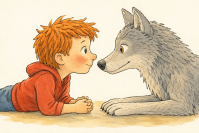
In The Jungle Book, Mowgli says, “We be of one blood, ye and I,” and the animals understand him. A fairy tale? Of course. But perhaps not entirely.
There are no magic words for talking to animals, but there are clues. Zoology and ethology, the science of animal behavior, teach us how animals live, how they communicate, what frightens them, and what makes them feel safe. By learning to read body language and understand an animal’s natural behavior, we can build relationships that are enjoyable for both sides.
Platform: Windows PCs & Chromebooks (Optimized for mouse or trackpad; Chrome or Firefox recommended)
Сurriculum
-
It would be wonderful to understand animals, wouldn’t it? We’ll start with dogs and cats, learn to read body language, explore the basics of ethology and training, and then cautiously move on to the most complicated species of all: humans.
-
Cities may look like terrible places for wild animals: traffic, noise, pollution, people everywhere, and precious little peace. Yet many species move in willingly. Let’s find out who lives beside us and why city life suits them surprisingly well.
-
Caring for Pets
Loving animals is the easy part. Caring for them well takes a little more knowledge. Learn how to choose a suitable pet, create a healthy living environment, recognize common problems, and make life comfortable for both animal and owner.
-
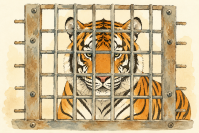
Are zoos prisons, refuges, conservation centers, or some combination of all three? Explore different approaches to keeping wild animals in captivity and weigh animal welfare, conservation, education, and the realities of life in the wild.
-
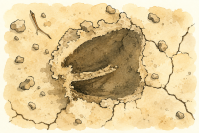
Finding animals in nature is often harder than observing them once you’ve found them. Learn to notice tracks, signs, sounds, shelters, feeding traces, and other clues that reveal who has been nearby.
-
Studying Animals: From Observation to Evidence
-
Animal intelligence is surprisingly difficult to measure. Memory, problem-solving, communication, social skills, and tool use may all count as intelligence, but not in the same way. Explore what scientists know and why simple rankings rarely work.
-
Animal Classification
Animals come in an astonishing variety of forms. Explore the major animal phyla and learn which structural features biologists use to tell them apart.
-
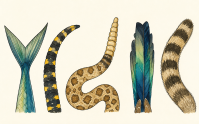
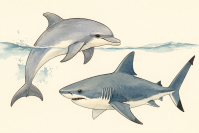
Fish, amphibians, reptiles, birds, and mammals all belong to the vertebrates, but they solve the problems of movement, breathing, reproduction, and survival in very different ways. Compare the major vertebrate groups and discover what unites them.
-
Aquarium Basics
A well-kept aquarium is like a window into an underwater ecosystem. Learn how tank size, temperature, water chemistry, filtration, oxygen, plants, and stocking choices affect the health of aquarium animals. -
Amphibians
-
Reptile Detective
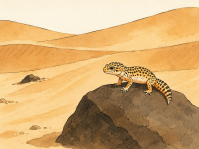
Snakes, lizards, turtles, and crocodilians may look very different, but they share a common evolutionary history. Investigate the traits that define reptiles and learn how to distinguish their major groups.
-
Modern Dinosaurs
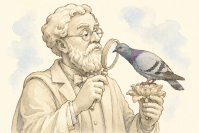
Dinosaurs are not entirely gone. Some of them are probably outside your window right now. Explore the evidence linking birds to theropod dinosaurs and discover how feathers, flight, bones, eggs, and other traits connect them. -
Mammal Detective
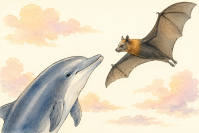
Mammals are familiar, but their diversity is enormous. Explore the traits that unite mammals and compare the very different ways they have adapted to life on land, underground, in water, and in the air.
-
Arthropod Detective
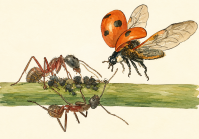
Insects are only one branch of the arthropod family. Learn how to distinguish insects from spiders, crustaceans, and other arthropods, then practice recognizing major insect groups.
-
Butterflies of the World
Explore butterflies from different parts of the world, learn how to distinguish them from other insects, compare their colors and forms, and investigate how they live. If you’re feeling ambitious, there’s even a butterfly card to build. -
Inside a Termite Mound
-
Inside an Anthill
-
Bee Life
-
How Does the Human Body Work
-
Evolutionary Evidence Lab
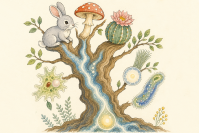
Charles Darwin noticed patterns that others had overlooked. Follow the evidence from fossils, anatomy, DNA, biogeography, and other sources, and investigate how scientists reconstruct evolutionary relationships.
-
Ice Age Expedition
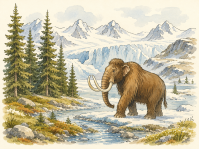
Travel back to the Ice Age and investigate when it happened, what caused it, how scientists know it occurred, and which animals shared the planet with early humans.
-
Human Evolution
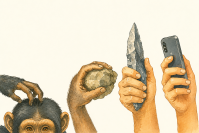
Travel deep into human prehistory. Compare bones and DNA, examine tools and archaeological finds, rebuild lost worlds, and meet the many relatives on our evolutionary family tree.
-
Forest Virtual Field Trip
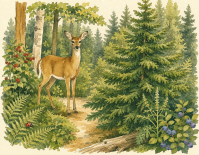
Take a closer look at the temperate forest outside your window. Use fallen leaves, bark, fruits, buds, and other clues to identify trees and investigate how deciduous forests change through the seasons.