

Survival Adventures
Here we’ll explore Earth’s biomes, compare the animals of different continents, and figure out why their fauna differs so much. We’ll also learn how to read and navigate maps confidently. By the end, the most diligent students may be able to find their way around with their eyes closed. Almost.
Platform: Windows PCs & Chromebooks (Optimized for mouse or trackpad; Chrome or Firefox recommended)
Сurriculum
1. Maps, Species Ranges & Biomes
Why do animals live where they do, and what can a map really tell us about their distribution? Learn the basics of zoogeography, get comfortable with continents and major islands, explore species ranges, and discover why every map simplifies reality.
Why do animals live where they do, and what can a map really tell us about their distribution? Learn the basics of zoogeography, get comfortable with continents and major islands, explore species ranges, and discover why every map simplifies reality.
2. How to Survive on a Desert Island
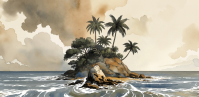
After a shipwreck, you find yourself stranded on a deserted island. Explore your surroundings, prioritize your actions, find water and food, build shelter, make fire, and figure out how to signal for rescue.
3. Temperate Forest Survival Quest
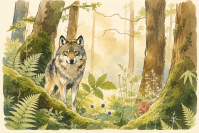
Can you make your way through a temperate forest and get back to civilization? Practice navigation, weather prediction, water purification, fire-starting, first aid, and other practical survival skills without leaving your couch.
4. Equator Survival Quest
Near the equator, summer never really ends. That sounds relaxing until heat, humidity, tropical rain, unfamiliar organisms, and limited resources become part of the plan. Let’s see how well you survive.
5. Polar Regions Expedition
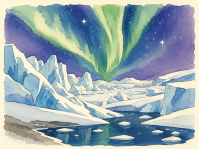
Travel to Earth’s coldest regions and compare the Arctic and Antarctic. Explore how climate, ice, geography, wildlife, and living conditions differ at opposite ends of the planet.
Near the equator, summer never really ends. That sounds relaxing until heat, humidity, tropical rain, unfamiliar organisms, and limited resources become part of the plan. Let’s see how well you survive.
5. Polar Regions Expedition
Travel to Earth’s coldest regions and compare the Arctic and Antarctic. Explore how climate, ice, geography, wildlife, and living conditions differ at opposite ends of the planet.
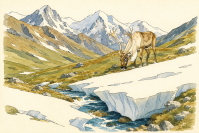
The tundra is cold, windy, wet, and locked in permafrost, yet life flourishes there during the short summer. Explore this unusual environment and make practical decisions about clothing, travel, food, shelter, and survival.
7. Taiga
The taiga stretches across enormous parts of the Northern Hemisphere, covered mainly by coniferous forest. Explore its climate, landscapes, plants, animals, and the secrets hidden among all those trees.
The taiga stretches across enormous parts of the Northern Hemisphere, covered mainly by coniferous forest. Explore its climate, landscapes, plants, animals, and the secrets hidden among all those trees.
Cross open grasslands where summer heat, winter cold, strong winds, fire, and limited water can turn a journey into a survival problem. Learn how to navigate the steppe, find resources, avoid hazards, and uncover traces of the ancient Scythians.
9. Subtropical Forest
Mild winters, warm summers, and plenty of food and water make subtropical forests look almost suspiciously comfortable. Explore who lives there and what makes these forests such favorable places for life.
Mild winters, warm summers, and plenty of food and water make subtropical forests look almost suspiciously comfortable. Explore who lives there and what makes these forests such favorable places for life.
10. Tropical Forest
Travel through tropical rainforests in Brazil, the Congo, and Indonesia. Compare their landscapes and wildlife, then face the heat, rain, dense vegetation, and other problems that make surviving there considerably less relaxing than it looks.
11. Savanna
Savannas lie somewhere between forests and grasslands, shaped by heat, seasonal drought, fire, and grazing animals. Explore how climate creates this ecosystem and meet the organisms that have learned to thrive there.
Deserts are not always endless seas of sand. Explore hot, cold, rocky, clay, and salt deserts, investigate their biodiversity, and make decisions about water, clothing, food, travel, weather, and dangerous organisms.
13. Mountain Biomes
Want to visit the tropics, taiga, tundra, and permanent snow without traveling around the world? Climb a mountain. Explore altitudinal zonation and see how climate and living communities change as elevation increases.
14. Oceans
The ocean covers most of our planet, yet much of it remains poorly explored. Travel through major marine zones and discover how depth, light, temperature, pressure, and distance from shore shape life in the sea.
15. Littoral zone
The littoral is a strange place between land and water, flooded at one moment and exposed at another. Explore the organisms that thrive in this constantly changing environment and the challenges they face every day.
The littoral is a strange place between land and water, flooded at one moment and exposed at another. Explore the organisms that thrive in this constantly changing environment and the challenges they face every day.
16. Wetlands
Bogs, marshes, and swamps can look solid until the ground moves under your feet. Explore these waterlogged ecosystems, meet the organisms that live there, and learn why wetlands are both difficult to cross and extraordinarily important.