Evolution
All modules feature visual interactive tasks and analytical challenges with instant feedback. Automated scoring supports the application of conceptual knowledge to exam-level questions.
The Origin of Life
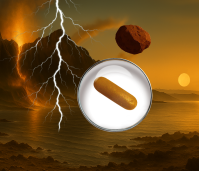
Interactive questions on early Earth, the chemical origins of life, the Miller-Urey experiment, major origin-of-life hypotheses, and the sequence of key events in Earth’s history.
Interactive questions on early Earth, the chemical origins of life, the Miller-Urey experiment, major origin-of-life hypotheses, and the sequence of key events in Earth’s history.
Interactive questions on the history of life, geological periods, major evolutionary transitions, fossil evidence, and the reconstruction of extinct organisms.
Ice Ages: Climate, Glaciers, and Megafauna
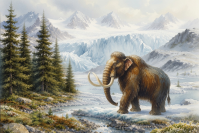
Interactive questions on Ice Age climate, glacier movement, geological evidence of glaciation, changes in sea level, megafauna adaptations, and the causes of extinction and survival.
The Dawn of Humanity
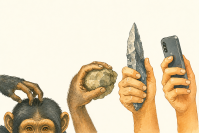
Interactive questions on human evolution through comparative anatomy, DNA, fossils, archaeology, hominin diversity, behavior, and the global spread of Homo sapiens.
Symbiosis
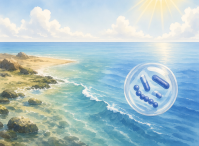
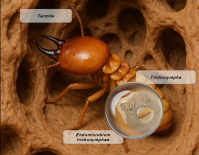
Interactive questions on symbiotic relationships, partner benefits, transmission, obligate and facultative associations, and the distinction between mutualism, commensalism, and parasitism.
Interactive questions on symbiotic relationships, partner benefits, transmission, obligate and facultative associations, and the distinction between mutualism, commensalism, and parasitism.
Symbiogenesis
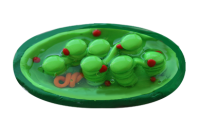
Interactive questions on the origin of mitochondria and chloroplasts, evidence for symbiogenesis, organelle structure, primary and secondary endosymbiosis, and proposed cases of symbiotic origin in eukaryotic cells.
Interactive questions on the origin of mitochondria and chloroplasts, evidence for symbiogenesis, organelle structure, primary and secondary endosymbiosis, and proposed cases of symbiotic origin in eukaryotic cells.
Evolutionary Evidence Lab
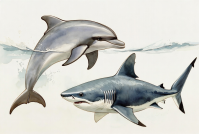
Interactive questions on natural selection, patterns of selection, evidence for evolution, evolutionary relationships, homologous and analogous structures, vestigial traits, and the evolution of complex adaptations.
Interactive questions on natural selection, patterns of selection, evidence for evolution, evolutionary relationships, homologous and analogous structures, vestigial traits, and the evolution of complex adaptations.